Embracing the Tradition of Tzedakah: The Significance of Tzedakah Bags
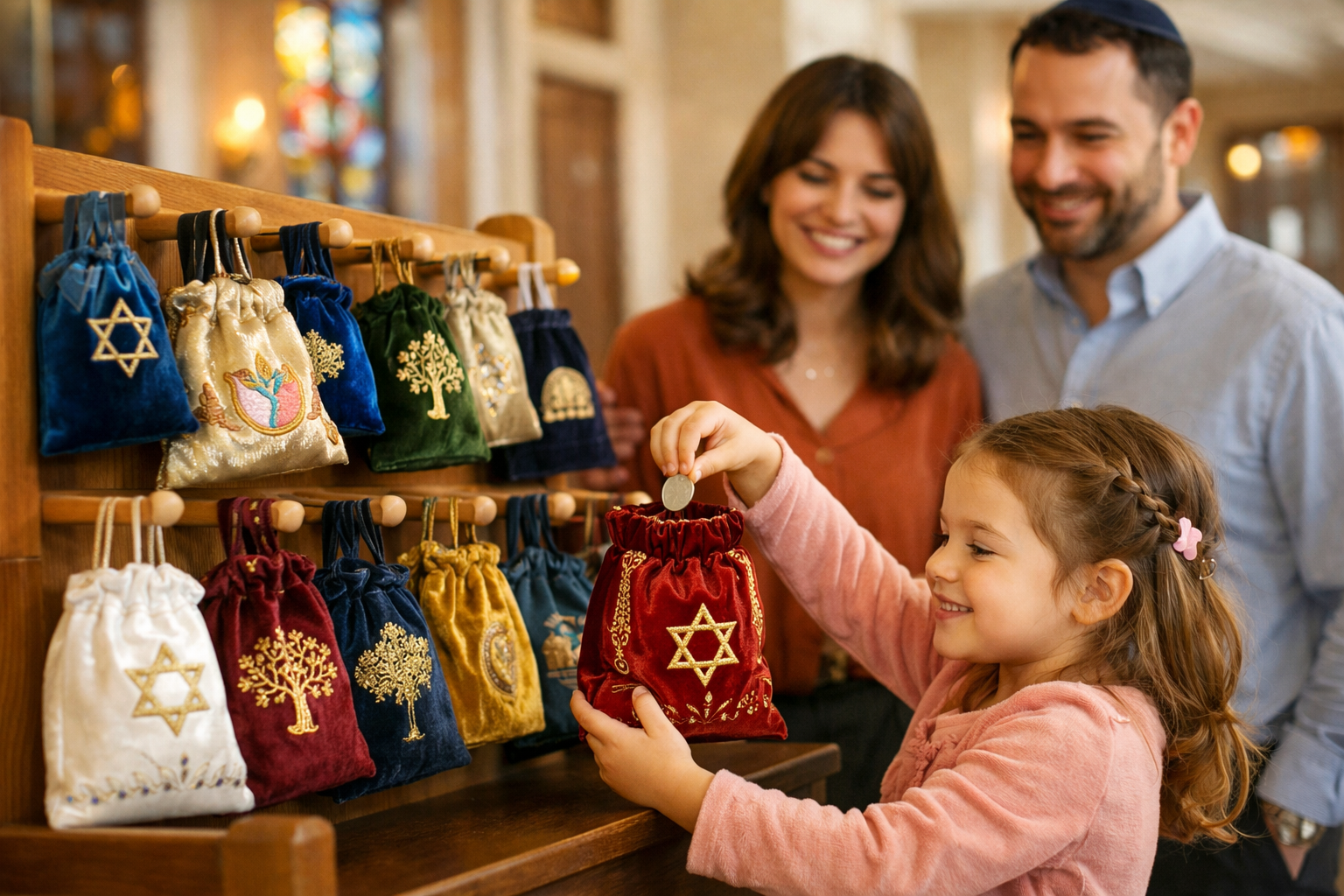
In a bustling synagogue foyer, a young child eagerly drops coins into a beautifully crafted bag, her small hands carefully ensuring not a single shekel misses its mark. This scene is a heartwarming snapshot of a Jewish tradition that has been passed down through generations: the giving of Tzedakah. As she smiles, her parents look on, proud of instilling in her the mitzvah of charity, a foundational pillar of Jewish life. The Display of 24 Assorted Tzedakah Bags serves as a beautiful vessel for this timeless practice, reminding us of the joy and responsibility of giving.
The Historical and Textual Roots of Tzedakah
The concept of Tzedakah, often translated as charity, is deeply embedded in Jewish tradition and law. Unlike the voluntary act of giving implied by the English word “charity,” Tzedakah is a religious obligation, a mitzvah commanded by the Torah. The word “Tzedakah” itself stems from the Hebrew root “tzedek,” meaning justice or righteousness, reflecting the Jewish view that giving to those in need is a fundamental aspect of leading a just life.
This practice is not merely an act of kindness but a duty that aligns with the pursuit of justice. Throughout Jewish texts, the importance of Tzedakah is emphasized repeatedly. In the Torah, the book of Deuteronomy commands, “You shall surely open your hand to your brother, to your poor, and to your needy in your land.” The Talmud further elaborates on this duty, stating that Tzedakah is as important as all other commandments combined. This historical emphasis on charity has shaped Jewish communities worldwide, fostering a culture of compassion and responsibility.
Furthermore, the act of giving is seen as a way to achieve personal growth and spiritual fulfillment. It teaches empathy and understanding, qualities that are essential in building a cohesive community. By practicing Tzedakah, individuals not only help others but also enrich their own lives, creating a ripple effect of goodness and kindness.
Regional and Communal Variations in Tzedakah Practices
While the obligation to give Tzedakah is universal among Jews, the methods and customs surrounding it can vary significantly across different communities. In Eastern European communities, for instance, it was common to see a “pushke” or charity box in every Jewish home, collecting coins for various charitable causes. This practice has influenced the modern use of Tzedakah bags and boxes, which are now seen as both practical and symbolic items in Jewish households.
In contrast, Sephardic communities might focus more on direct giving, where individuals personally hand money to those in need. This practice highlights a personal connection and immediate impact, reinforcing the communal bonds and the personal responsibility of helping one’s neighbor. In Israel, the culture of Tzedakah is vibrant and diverse, with many organizations and individuals actively engaging in charitable acts. The assorted Tzedakah bags reflect this diversity, offering a variety of designs and materials to suit different preferences and traditions.
These regional differences illustrate the adaptability of Tzedakah practices, showing how communities tailor their charitable efforts to meet local needs and cultural norms. Whether through a communal pushke or personal handouts, the essence of Tzedakah remains rooted in the shared Jewish value of justice and compassion.
The Role of Tzedakah Bags Today
In contemporary Jewish life, Tzedakah bags and boxes continue to play a significant role, both in Israel and in Jewish communities around the world. These items are not only functional but also serve as educational tools, introducing children to the practice of giving from a young age. The act of placing coins into a Tzedakah bag can be a powerful, tangible reminder of one’s duty to help those in need.
For Jews living outside Israel, Tzedakah bags can also serve as a connection to their heritage and community. They are often used in religious schools and community centers as part of educational programs that teach about Jewish values and practices. The Display of 24 Assorted Tzedakah Bags is particularly suited for such settings, offering a beautiful and practical way to encourage the mitzvah of Tzedakah.
Moreover, these bags provide an opportunity to engage in Tzedakah in a way that is both meaningful and visually appealing. The varied designs and materials of the bags can inspire creativity and personal expression, making the act of giving a more personalized experience. By using these bags, individuals and communities can maintain a vibrant connection to their heritage while adapting to modern aesthetics.
Caring for and Respectfully Storing Tzedakah Bags
While Tzedakah bags are designed to be durable, often crafted from leather or leather-like materials, it’s important to treat them with respect. These bags are more than just containers; they are symbols of a sacred duty. To ensure their longevity, store them in a dry place, away from direct sunlight, which can cause the materials to fade or crack over time.
When not in use, consider placing the Tzedakah bags in a dedicated spot, such as a shelf or a cabinet that is easily accessible yet protected. This approach not only maintains the physical condition of the bags but also serves as a continual reminder of the importance of Tzedakah in Jewish life. Whether used in a family setting or a communal environment, these bags uphold the tradition of giving.
To explore the beauty and functionality of these Tzedakah bags, and to incorporate this meaningful practice into your own life or community, visit the product page today. By doing so, you can contribute to a tradition that has been cherished for generations, enriching both your life and the lives of others.
Choosing the Right Tzedakah Bag for Your Needs
Selecting the right Tzedakah bag involves considering various factors to match personal or communal preferences. The assortment of 24 bags provides a range of designs and materials, allowing for flexibility in choice. Whether you prefer a classic leather look or a more modern leather-like material, these options cater to diverse tastes.
For those organizing community events or educational programs, the variety in this display ensures that each participant can find a bag that resonates with them personally. The assortment offers an opportunity to discuss the significance of each design, fostering deeper engagement with the tradition of Tzedakah. By choosing a bag that reflects personal values and aesthetic preferences, the act of giving becomes a more meaningful and personalized experience.