The Mezuzah: A Timeless Tradition for Modern Homes
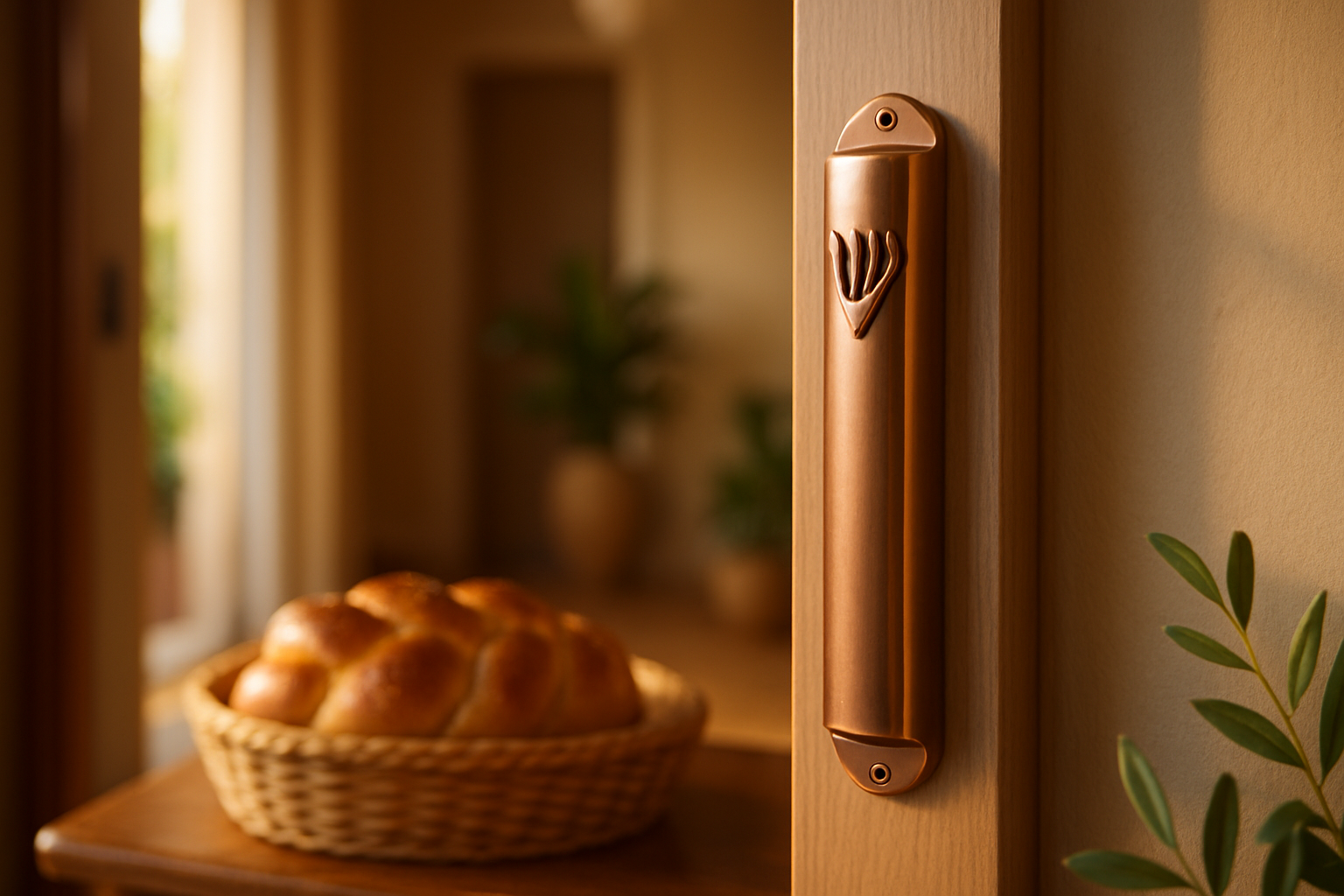
Welcoming Guests with a Mezuzah: A Timeless Tradition
Imagine stepping into a home, the sound of laughter and the aroma of fresh challah greeting you at the door. As you enter, your eyes are drawn to a beautiful copper-finished mezuzah affixed to the doorpost. This small yet significant object, like our Nickel Mezuzah 20 cm, stands as a constant reminder of faith and tradition. The mezuzah is not just an ornament; it is a symbol of Jewish identity and a guardian for the home.
The mezuzah’s presence at the entrance to a home serves as a warm welcome to guests, subtly conveying the values and traditions held dear by those within. It is a powerful statement of faith, marking the home as a space of spirituality and community. The intricate design and craftsmanship of the Nickel Mezuzah 20 cm enhance this tradition, providing both beauty and spiritual significance.
The Historical and Textual Roots of the Mezuzah
The mezuzah has its origins in the Torah, specifically in the Shema prayer found in Deuteronomy 6:4-9 and 11:13-21. These verses command the Jewish people to “write them on the doorposts of your house and on your gates.” The mezuzah case holds a parchment scroll (klaf) inscribed with these verses, which affirm the oneness of God and the Jewish commitment to His commandments. Historically, the practice of placing a mezuzah on the doorpost has been a way to sanctify the home and create a tangible connection to Jewish faith and heritage.
Over centuries, the mezuzah has evolved in design and material, yet its purpose remains unchanged. It serves as a daily reminder of God’s presence and protection, a practice observed since ancient times. The mezuzah is not merely a decorative piece but a fulfillment of a mitzvah, a commandment that shapes Jewish life. This sacred object links past generations with the present, maintaining a continuous line of faith and tradition.
Regional and Communal Variations in Mezuzah Practices
While the fundamental purpose of the mezuzah remains consistent, its application can vary across different Jewish communities. In Ashkenazi traditions, the mezuzah is often placed at an angle, a compromise between Rashi, who advocated for a vertical placement, and Rabbeinu Tam, who preferred a horizontal one. In contrast, Sephardic customs typically affix the mezuzah vertically.
The materials and designs of mezuzah cases also reflect regional influences. In Israel, mezuzah cases might feature local motifs or be crafted from indigenous materials, while in the diaspora, designs may incorporate elements reflective of local culture. Regardless of these differences, the mezuzah remains a unifying symbol, transcending geographic and cultural boundaries.
The Mezuzah’s Role in Today’s Homes
Today, the mezuzah continues to be an essential element in Jewish homes worldwide, including those outside Israel. It is often the first Jewish ritual object a family acquires when moving into a new home, symbolizing a fresh start and the establishment of a Jewish household. The mezuzah is also a popular gift for occasions such as weddings and housewarmings, offering a blend of tradition and personal expression.
Our Nickel Mezuzah 20 cm, with its elegant copper finish, is a perfect example of how modern artistry can enhance traditional objects. It provides a stylish yet meaningful addition to any doorway, reminding those who enter of the home’s sanctity and the values it upholds.
Choosing the Right Mezuzah for Your Home
Selecting the right mezuzah involves more than just choosing a design that pleases the eye. Consideration should be given to the size and material of the mezuzah case, as these can affect its durability and suitability for different environments. The Nickel Mezuzah 20 cm is crafted from durable metal, ensuring it withstands the test of time while maintaining its aesthetic appeal.
Additionally, the copper finish of this mezuzah adds a warm, inviting touch to any home. Whether placed at the main entrance or on the doorposts of individual rooms, it serves as a beautiful reminder of tradition and faith. This mezuzah is particularly well-suited for those seeking a blend of modern style and timeless elegance.
Respectful Treatment and Storage of a Mezuzah
To honor the mezuzah’s sacred nature, it is important to treat it with respect. The mezuzah case should be securely affixed to the doorpost at the entrance to the home and ideally to the doorframes of each room, excluding bathrooms. It should be placed on the right side, approximately at shoulder height, and angled inward if following Ashkenazi custom.
When removing a mezuzah, such as during a move, it should be handled with care. The parchment inside, known as the klaf, is particularly sacred and should be stored in a safe, dry place to prevent damage. If the mezuzah becomes damaged or worn, it should be replaced promptly to maintain its protective and spiritual significance.
For those interested in enhancing their home’s entryway with a piece that combines tradition and elegance, the Metal Mezuzah collection offers a variety of options to suit different tastes and styles. Explore our range and find the perfect piece to grace your home.